Physical Address
304 North Cardinal St.
Dorchester Center, MA 02124
Physical Address
304 North Cardinal St.
Dorchester Center, MA 02124

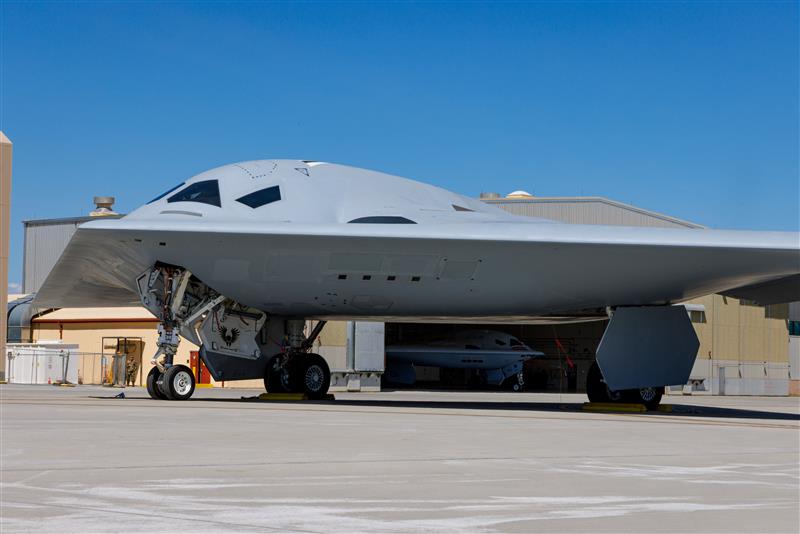
Military Sentinel, Whiteman AFB, Missouri – The U.S. Army Corps of Engineers has awarded Conti Federal Services a $74.8 million contract to build a radio frequency and measurements hangar for the B-21 Raider stealth bomber at Whiteman Air Force Base, marking another concrete step in the installation’s transition into a full B-21 operating base.
The facility will house one B-21 aircraft along with supporting workshops, material storage, and administrative offices. Key details reported:
A radio frequency (RF) and measurements hangar is a specialized facility used to test an aircraft’s radar signature and electronic systems in a controlled environment a capability that matters directly for a bomber designed around low observability.
Whiteman is set to become the B-21’s second main operating base, after the Air Force selected it over Dyess Air Force Base in Texas. Ellsworth Air Force Base in South Dakota became the program’s first main operating base in 2021 and currently functions as the B-21’s formal training site.
Whiteman already hosts the Air Force’s entire B-2 Spirit fleet 19 aircraft, two of which have been lost in crashes over the years. Layering B-21 infrastructure onto an installation already built around a low-observable bomber fleet is a logical fit, though it also means Whiteman will be running two distinct stealth-bomber programs simultaneously for some years.
Conti Federal is not new to this work: the company has built other B-21 support facilities at Ellsworth, including a $31.7 million fuel cell maintenance hangar awarded in October 2024, part of a broader multi-year construction push tied to the bomber’s rollout.
Built by Northrop Grumman, the B-21 first flew in November 2023 and remains in low-rate initial production. The Air Force and Northrop Grumman announced an agreement in February 2026 to expand production capacity and speed up deliveries, and the service confirmed in July 2026 that the aircraft will fly with a two-person crew. Testing has continued through 2026, including an aerial refueling demonstration with a KC-135 tanker in April.
The B-21 is intended to gradually replace both the B-2 and the older B-1 Lancer, which the Air Force expects to begin retiring around 2031 and 2032 as the service moves toward a two-bomber fleet built around the B-21 and the B-52.
The 2029 completion date puts this hangar’s finish roughly in step with the program’s broader production ramp, but low-rate initial production timelines have a track record of slipping across major aircraft programs a risk worth flagging rather than assuming away. [Medium confidence] Whether Whiteman receives operational B-21 aircraft on a similar timeline, or infrastructure again outpaces delivery, is the more consequential open question than the hangar contract itself.

James Whitfield is a defense news writer at Military Sentinel, covering military technology, naval operations, military aviation, international security, and global defense developments. His work focuses on providing informative reporting, relevant context, and accessible explanations of modern military affairs and emerging defense technologies.
Contact: [email protected]